
Fire Extinguisher Inspection and Maintenance
Fire Extinguisher Inspection and Maintenance
To ensure that a fire extinguisher does not fail at a critical moment, it must be kept in proper working order. This means that fire extinguishers must be regularly visually checked, inspected and maintained in accordance with the manufacturer’s instructions and applicable requirements.
Tondi Tulekaitse provides fire extinguisher inspection and maintenance services to ensure that extinguishers are ready for use, properly labelled and maintained on time.
When should a fire extinguisher be inspected and maintained?
If the manufacturer’s instructions are not available, a fire extinguisher must be:
visually checked once every quarter;
inspected once a year if it is exposed to moisture, vibration or temperature fluctuations, for example outdoors, in a vehicle or in a summer cottage;
inspected once every two years if it is kept in a dry location with a stable temperature;
inspected immediately if anything suspicious is found during the visual check;
maintained after each use;
maintained if defects are discovered;
maintained every five years for foam and water extinguishers, and every ten years for other fire extinguishers.
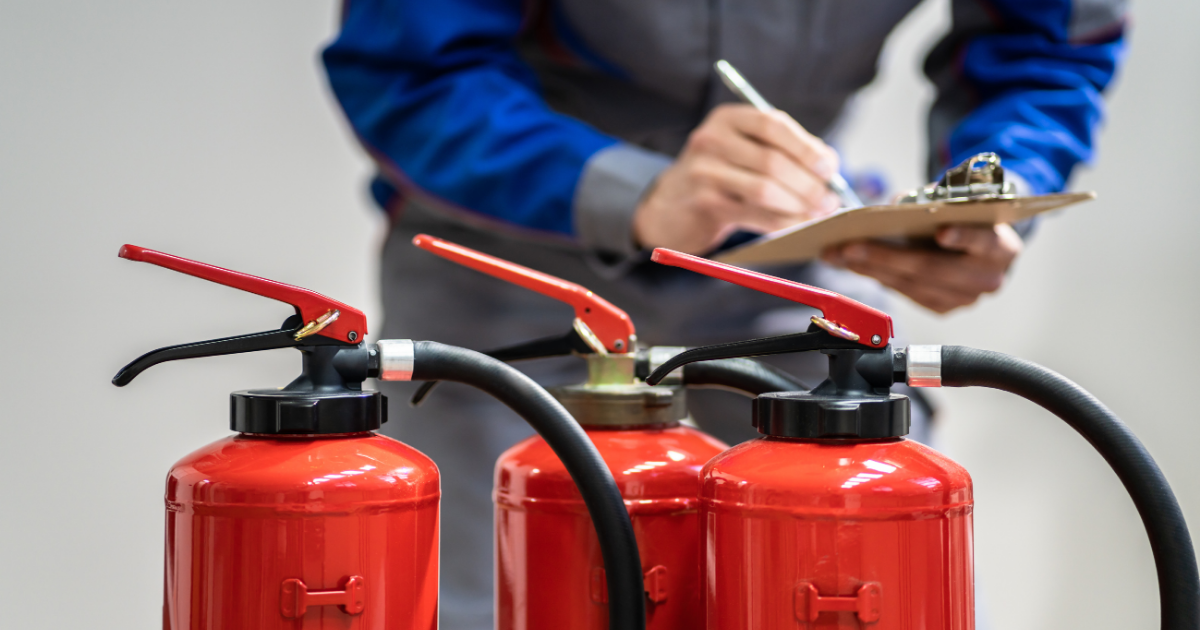
What is checked during a fire extinguisher inspection?
A fire extinguisher inspection helps ensure that the extinguisher is in working order and ready for use. During the inspection, the following aspects are assessed, among others:
whether the fire extinguisher is located in its designated place;
whether the extinguisher is visible and accessible;
whether the operating instructions and markings are legible;
whether the extinguisher has any visible damage;
whether the pressure indicator is within the required range;
whether the seals and safety pins are intact;
whether the hose, trigger, valve and extinguisher body are in good condition;
whether the extinguisher requires maintenance or further inspection.
Why is regular maintenance important?
A fire extinguisher must work immediately when it is needed. If the extinguisher has lost pressure, is damaged, incorrectly placed or has not been maintained, it may not be effective in the early stage of a fire.
Regular inspection and maintenance help prevent situations where a fire extinguisher is not ready for use or does not comply with applicable requirements.
Legal basis and detailed requirements
Read more in the regulation “Requirements for Fire Extinguishers and Hose Systems, Their Selection, Installation, Marking and Maintenance”, or see our explanation below.
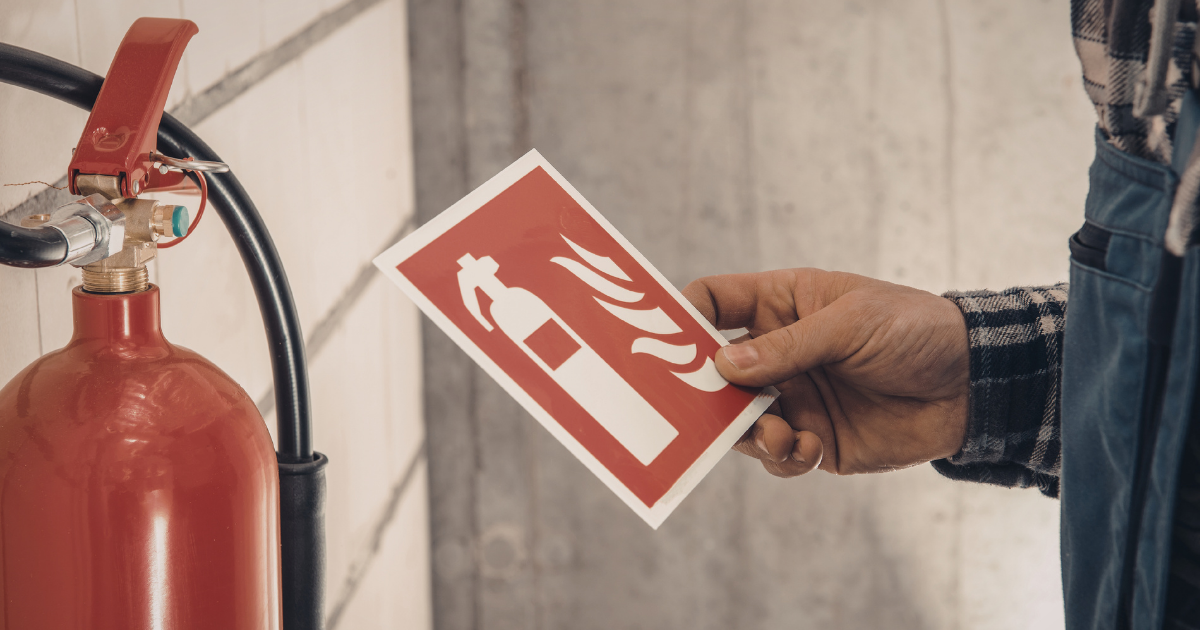
Fire extinguisher visual check
The owner must visually check the condition of fire extinguishers once every quarter to ensure that each fire extinguisher:
is located in its designated place;
is not obstructed and the operating instruction label is legible;
has no visible damage;
has the pressure indicator, if present, in the green zone;
has intact seals and safety pins.
If the visual check gives reason to suspect a malfunction, the owner of the fire extinguisher must arrange an inspection to identify the fault and maintenance to eliminate it.
Fire extinguisher inspection
A fire extinguisher must be inspected at the frequency specified by the manufacturer, or if the results of the visual check require it. If the manufacturer has not specified an inspection frequency, the fire extinguisher must be inspected:
once a year if it is kept in a location where it is exposed to moisture, vibration or temperature fluctuations;
once every two years if it is kept in a dry location with a stable temperature.
Inspection of a pressurised fire extinguisher includes the following operations:
checking the legibility of the label and renewing it if necessary;
visually inspecting the trigger, valve and seal;
checking the pressure of the fire extinguisher, except for carbon dioxide extinguishers;
check-weighing the extinguisher in the case of carbon dioxide extinguishers;
checking the flowability of the extinguishing powder in the case of powder extinguishers;
checking the hose;
externally inspecting the extinguisher body;
checking the fire extinguisher’s compliance with the requirements;
attaching an inspection tag to the fire extinguisher.
Inspection of a cartridge-operated fire extinguisher includes the following operations:
checking the legibility of the label and renewing it if necessary;
weighing the pressure cartridge and attaching an internal inspection tag to the cartridge;
checking the properties of the extinguishing agent;
cleaning the valve;
checking the seals and replacing them if necessary;
checking the hose;
externally inspecting the extinguisher body;
checking the fire extinguisher’s compliance with the requirements;
equipping the fire extinguisher with a seal and an inspection tag.
Fire extinguisher maintenance
A fire extinguisher must be restored to working order after each use and maintained as necessary, but not less frequently than specified by the manufacturer. If the manufacturer has not specified a maintenance frequency, water and foam extinguishers must be maintained every five years, and other fire extinguishers every ten years.
The parts and compressed gas used during maintenance must not reduce the safety of the fire extinguisher or the extinguishing capacity specified by the manufacturer. The properties of the extinguishing agent must correspond to the information stated on the extinguisher label.
In addition to the operations carried out during inspection, maintenance includes at least the following:
emptying the fire extinguisher;
internally inspecting the extinguisher body;
checking all parts of the fire extinguisher for integrity and wear, and replacing them if necessary;
replacing or restoring the extinguishing agent in accordance with the manufacturer’s instructions;
pressure testing the extinguisher body and pressure cartridge in accordance with the manufacturer’s instructions, but not less frequently than every ten years;
checking the operation of the pressure indicator;
equipping the fire extinguisher pressure cartridge with an internal maintenance tag;
charging the fire extinguisher, meaning filling it with extinguishing agent and pressurising it if necessary;
equipping the fire extinguisher with a seal, maintenance tag and inspection tag.
Fire Extinguisher Inspection and Maintenance
Request a quote or additional information from our specialists.
Related services

Fire Safety Section of a Construction Project
The fire safety section of a construction project describes how fire safety is ensured in a building and what solutions are used to limit the spread of fire and smoke.
View Details
Fire Safety Training and Fire Drill
Fire safety training and fire drills help employees understand fire risks, safe evacuation principles and how to act correctly in the event of a fire.
View Details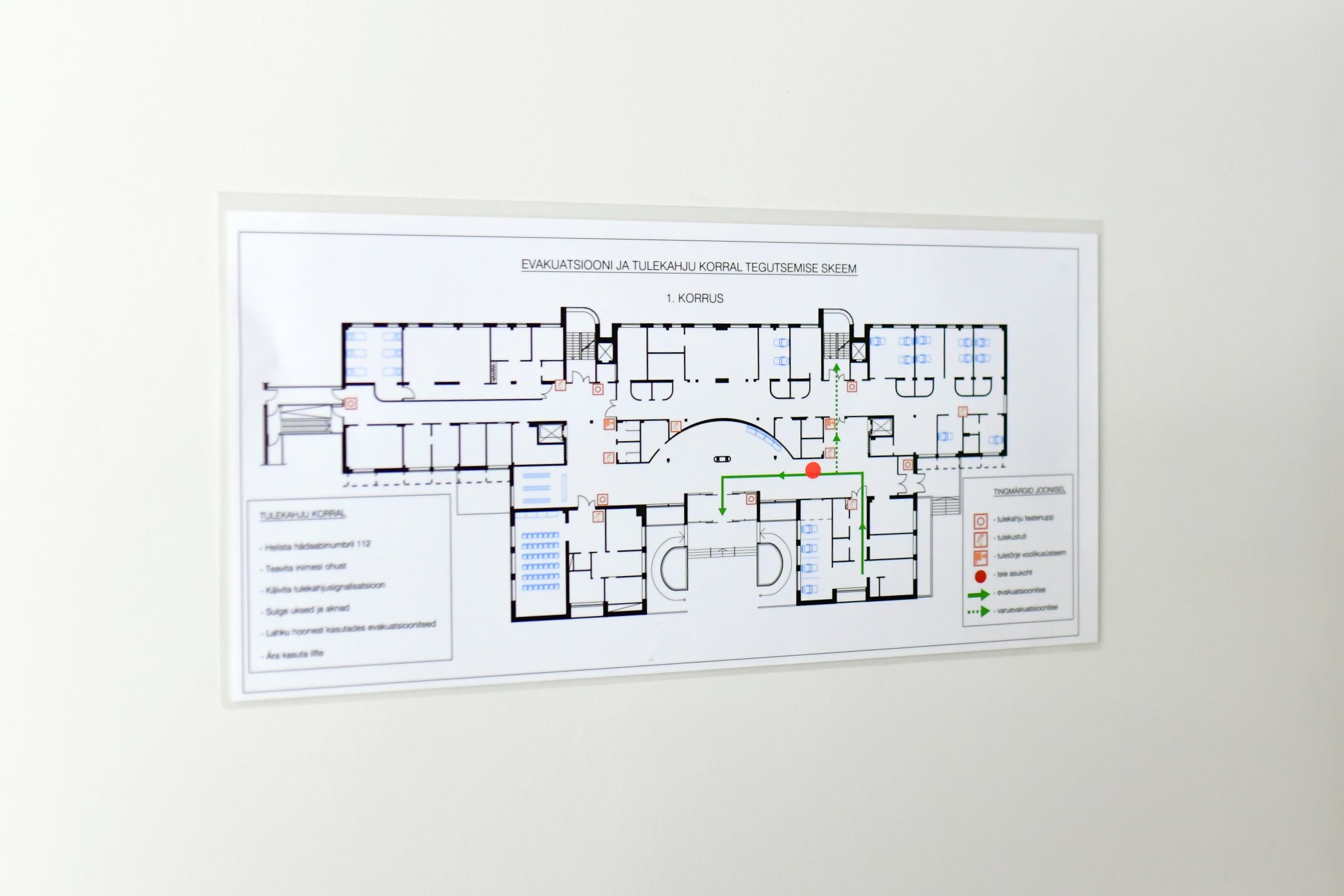
Evacuation Diagrams
An evacuation diagram helps people find a quick and safe way out of a building in the event of a fire or other emergency by showing evacuation routes and exits.
View Details