
About fire extinguishers: visual inspection, inspection and maintenance
About fire extinguishers: visual inspection, inspection and maintenance
Having a fire extinguisher is not enough on its own. The extinguisher must be visible, accessible and in working order. If it is in the wrong place, hidden, damaged or past its inspection date, it may not be of help in the event of a fire.
Fire extinguisher upkeep is ensured through regular visual inspection, inspection and maintenance.
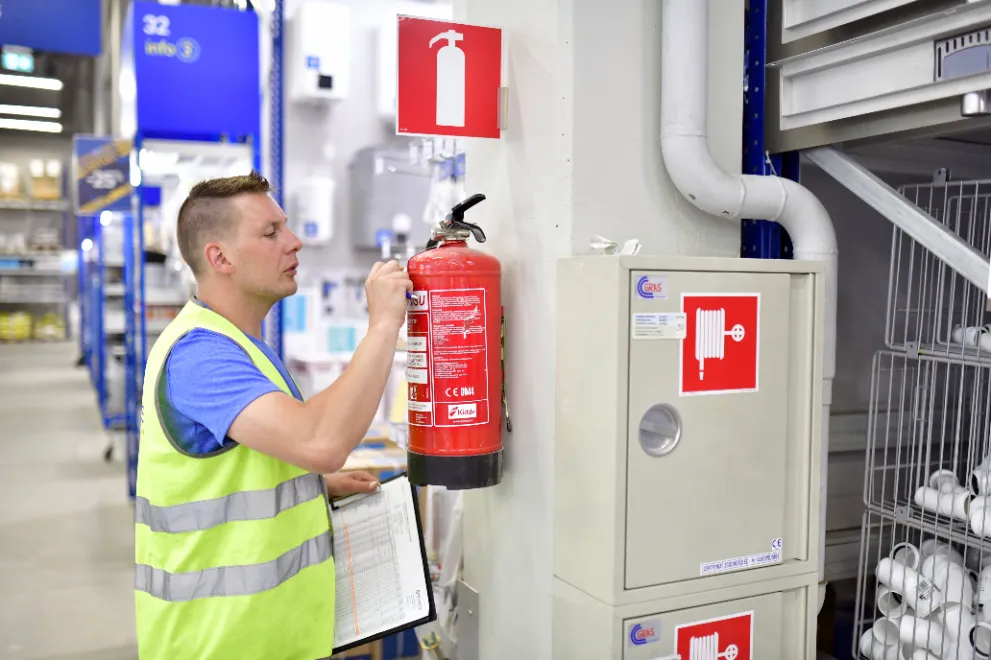
Visual inspection
Visual inspection means that the owner or holder of the fire extinguisher regularly checks whether the extinguisher is present, accessible and externally in good condition.
If the manufacturer has not specified a different frequency, the fire extinguisher must be visually inspected once per quarter.
During visual inspection, it is checked whether:
the extinguisher is in its designated location;
the extinguisher is not hidden or obstructed;
the label with the operating instructions is readable;
the extinguisher is not visibly damaged;
the pressure gauge indicator is in the green zone, if the extinguisher has a pressure gauge;
the seals and safety devices are intact.
If the visual inspection raises a suspicion that the extinguisher is not in working order, an inspection and, if necessary, maintenance must be arranged.
Inspection
Inspection is a more thorough check carried out by a competent person.
If the manufacturer has not specified the inspection frequency, the fire extinguisher must be inspected:
once a year, if it is exposed to moisture, vibration or temperature fluctuations;
once every two years, if it is located in a dry place with a stable temperature;
immediately, if there is a suspicion that the extinguisher is not in working order.
Simple examples:
An extinguisher may need inspection once a year if it is located outdoors, in a vehicle, garage, warehouse, production area, summer house or another place where conditions may change.
Inspection once every two years may be suitable in a dry indoor environment with a stable temperature, such as an office, corridor or heated technical room, unless the manufacturer’s instructions specify otherwise.
Maintenance
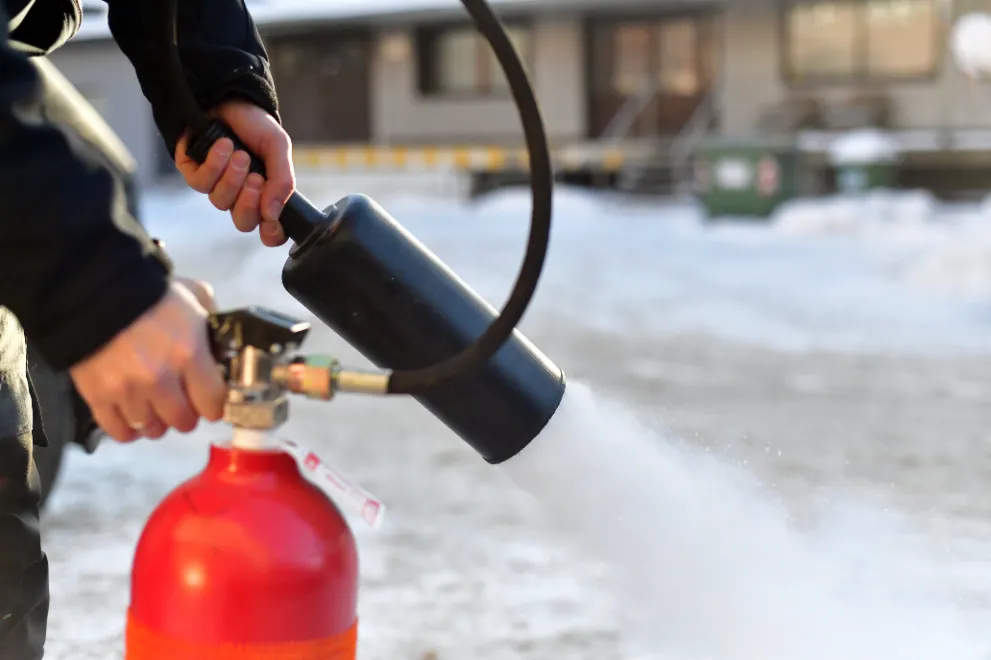
Maintenance is carried out after every use and whenever necessary.
If the manufacturer has not specified the maintenance frequency:
foam and water extinguishers are maintained every 5 years;
other fire extinguishers are maintained every 10 years.
A maintenance report is prepared after maintenance and pressure testing.
The exact need and timing of pressure testing depends on the type of extinguisher, the manufacturer’s instructions and applicable requirements. Therefore, it should not be simplified into a general “10-year rule” without checking the specific extinguisher.
When does a fire extinguisher need attention?
A fire extinguisher should be checked or given to a specialist for inspection if:
the inspection date has passed;
the extinguisher is not in its designated location;
the extinguisher is hidden or inaccessible;
the label or operating instructions are not readable;
the pressure gauge indicator is not in the green zone;
the seal or safety device is damaged;
the cylinder, hose or another part is visibly damaged;
the extinguisher has been used, even partially.
If a fire extinguisher has been used, it is not enough to simply place it back on the wall. It needs maintenance or restoration so that it is ready for use again when needed.
Tondi Tulekaitse helps with fire extinguisher inspection, maintenance and choosing a suitable solution.